
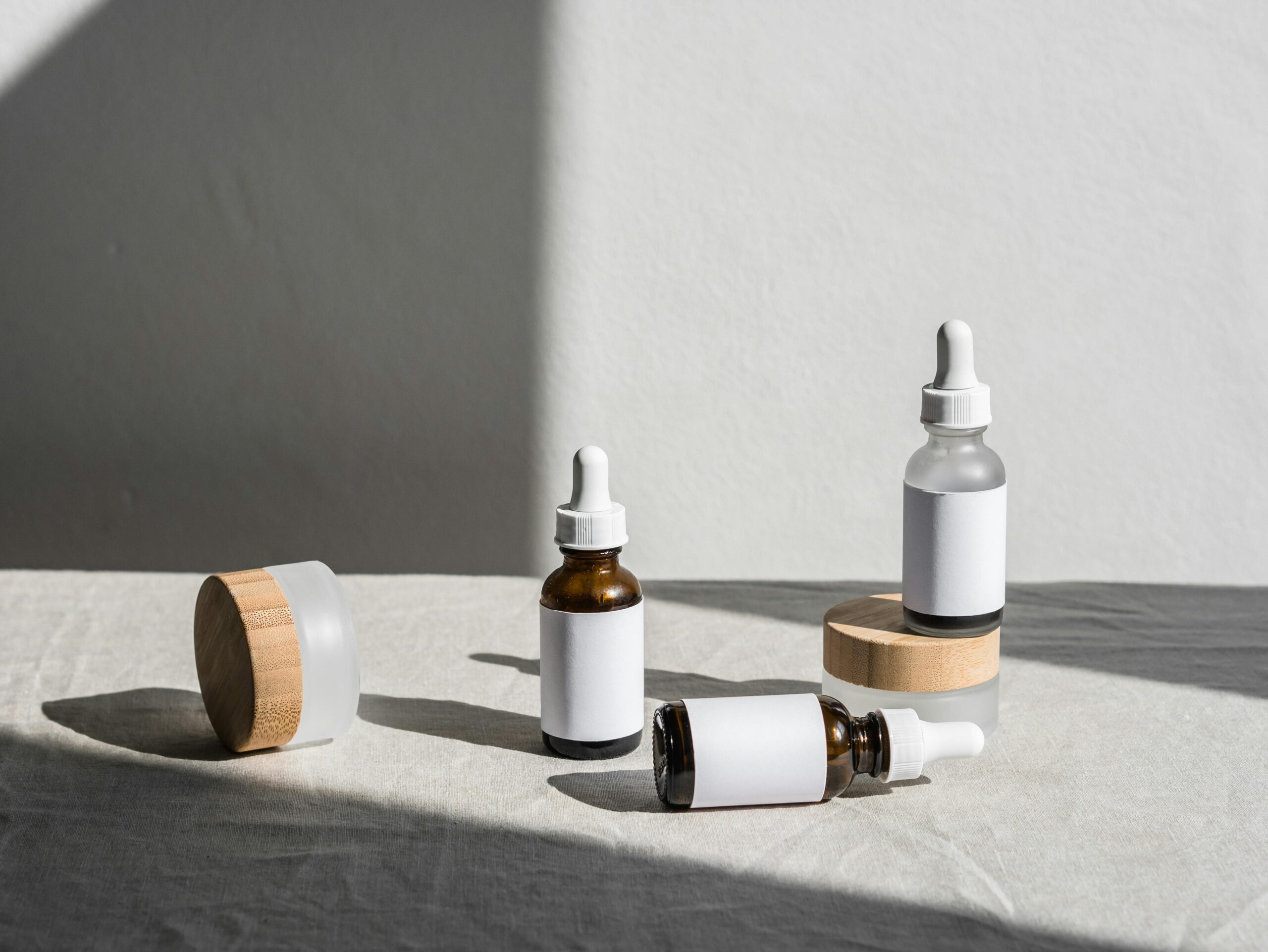
For years, beauty forums repeated the same warning: don’t use vitamin C and niacinamide together — they “cancel each other out” or even turn into a skin irritant. The AAD vitamin C niacinamide stance is actually the opposite: the American Academy of Dermatology lists both as evidence-backed skincare actives in its own dermatologist-reviewed guidance — and publishes no warning against using them in the same routine.
Affiliate disclosure: This post contains affiliate links. If you purchase through them, I may earn a small commission at no extra cost to you. I only recommend products I’ve researched and believe in.
What the American Academy of Dermatology Actually Says About These Ingredients
In its guide to dermatologist-recommended skincare for your 20s, the AAD names vitamin C serum or cream as one of the two science-backed actives worth adding to a daily routine — alongside retinoids. Board-certified dermatologist Rebecca Baxt, MD, FAAD, summarizes it bluntly on that page: “Science shows that this ingredient can reduce skin aging and dark spots.” The AAD’s recommended timing is morning, after cleansing and before sunscreen.
The AAD’s position on niacinamide is less prominent on its public pages but well documented in its own continuing-education material. In an AAD residency teaching document on cosmeceuticals, niacinamide is classified as anti-inflammatory, a collagen regulator that affects fibroblast metabolism, an inhibitor of mast cell histamine release, and a contributor to both collagen and ceramide synthesis — the same ceramide-synthesis effect that explains why niacinamide is associated with a stronger skin barrier. The same AAD document lists niacinamide among the ingredients that lighten pigment.
In short, the AAD treats both ingredients as evidence-backed and useful — and nowhere does it advise against layering them.
Where the “Don’t Mix” Myth Came From
The idea that combining vitamin C and niacinamide creates problems traces back to research from the 1960s that showed the two molecules could react to form nicotinic acid (niacin), which can cause skin flushing. That research used non-stabilized forms of both ingredients at high temperature over long periods — conditions that have almost nothing in common with how modern skincare is formulated, stored, or used at room temperature on your face.
Cosmetic chemists, dermatology educators, and peer-reviewed reviews have since corrected the record. Formulators stabilize both ingredients in modern products, and the reaction simply doesn’t happen at meaningful rates under normal skincare conditions. Paula’s Choice, whose internal chemistry team has published a detailed breakdown of this myth, concludes that the “don’t mix” advice is based on outdated, unrepresentative chemistry.
What the Clinical Evidence Shows When You Combine Them
The newer literature actually points the other direction: when niacinamide and vitamin C are deliberately combined in a formulation, they tend to work together on the concerns the AAD cares about most — pigmentation and skin tone.
A 2022 PMC study tested a topical combination of niacinamide, vitamin C, and PDRN and found the combination mitigated melanogenesis by modulating nicotinamide nucleotide transhydrogenase — a specific cellular mechanism behind dark spot formation.
A more recent randomized study evaluated a serum containing 5% niacinamide, 1% tranexamic acid, 0.2% vitamin C, and 1.5% glycolic acid against 4% hydroquinone in melasma patients. After three months, the multi-ingredient serum produced benefits comparable to hydroquinone — historically the dermatology gold standard for stubborn pigmentation.
For each ingredient on its own, the AAD’s view is supported by separate landmark trials:
- The pigmentation evidence for niacinamide comes from Hakozaki and colleagues at the British Journal of Dermatology, who showed niacinamide significantly reduced hyperpigmentation and increased skin lightness versus vehicle control after 4 weeks of use, by inhibiting melanosome transfer.
- The anti-aging evidence comes from Bissett’s 12-week split-face trial in Dermatologic Surgery, in which 50 women applied 5% niacinamide twice daily and saw measurable reductions in fine lines, hyperpigmented spots, red blotchiness, and yellowing, with improved elasticity.
Vitamin C’s mechanism is complementary: it works on collagen synthesis and as an antioxidant against UV-induced damage, which is precisely why the AAD pairs it with sunscreen in the morning.
For a fuller breakdown of the niacinamide timeline on its own, see how long does niacinamide take to work.
How to Layer Vitamin C and Niacinamide for Best Results
The practical question is not whether to combine them but how. Two formats are common and both are supported by the evidence above.
Option 1 — Both ingredients in one product. Many modern serums and moisturizers contain niacinamide and vitamin C (often as a stable derivative such as sodium ascorbyl phosphate or tetrahexyldecyl ascorbate) in the same formula. This is the most foolproof approach: the formulator has already stabilized the pH and the active ratio for you.
Option 2 — Layered separately. If you want to use a dedicated vitamin C serum and a separate niacinamide serum, the AAD’s recommended order applies: cleanser → vitamin C serum → wait a minute or two → niacinamide → moisturizer → sunscreen. Apply the thinner-textured product first. The brief pause isn’t strictly required for the chemistry, but it lets each layer settle.
Either way, the AAD’s most important point about vitamin C still applies: pair it with sunscreen every morning. The combined effect of niacinamide and vitamin C on pigmentation is real, but UV continues to create new pigmentation faster than any active can clear it. If you don’t already have one dialed in, see my guide to best sunscreen for anti-aging in your 30s.
Morning or Night? Or Both?
Vitamin C is most useful in the morning, where it acts as an antioxidant against UV-induced free radicals before sunscreen is applied. Niacinamide is non-photosensitizing and tolerant of nearly any ingredient, so it works morning, evening, or twice daily. For people in their 30s who want maximum return on a simple routine, twice-daily niacinamide combined with morning vitamin C tracks closely with how the source studies were actually run.
If your evening routine also includes retinol, niacinamide is one of the few actives that genuinely helps you tolerate it by supporting the skin barrier. The combination is covered in more detail in retinol and vitamin C together: how to layer them safely, which addresses sequencing for sensitive skin.
Pairing that evening niacinamide step with a dedicated night cream — built around ceramides or extra niacinamide — locks in the barrier support while you sleep. See our picks for the best night creams for your 30s.
Products That Make This Combo Easy
Below are well-formulated options at different price points. Concentrations and stability matter more than brand name — these meet the bar.
Two-in-one (niacinamide + vitamin C in one bottle):
- CeraVe Skin Renewing Vitamin C Serum — 10% L-ascorbic acid plus niacinamide and ceramides, fragrance-free, dermatologist-developed. 👉 Check price on Amazon →
- Naturium Niacinamide Serum 12% Plus Zinc 2% — high-percentage niacinamide pairs cleanly with a separate vitamin C in the morning. 👉 Check price on Amazon →
Dedicated vitamin C (use with a separate niacinamide):
- La Roche-Posay 10% Pure Vitamin C Serum — stable L-ascorbic acid formula at a moderate concentration; well tolerated. 👉 Check price on Amazon →
Dedicated niacinamide (use with a separate vitamin C):
- Paula’s Choice 10% Niacinamide Booster — research-backed brand, can be added to any moisturizer. 👉 Check price on Amazon →
Always check current Amazon availability and pricing before purchasing — formulations and packaging are updated periodically.
Common Mistakes to Avoid
A few patterns trip people up even after they’ve decided to use both:
- Stacking too many actives at once. Niacinamide is exceptionally compatible, but introducing vitamin C, niacinamide, retinol, and an exfoliating acid in the same week makes it impossible to identify what’s helping or irritating you. Add one new active at a time and wait 2–4 weeks.
- Expecting visible pigmentation results in days. The Hakozaki study reported the first significant pigmentation changes at the 4-week mark, and the Bissett study used a full 12 weeks. The biology genuinely takes that long.
- Skipping sunscreen. Without daily SPF, vitamin C’s antioxidant work and niacinamide’s pigmentation work are both swimming upstream.
- Using extreme concentrations on sensitive skin. Vitamin C above 15–20% or niacinamide above 10% can occasionally cause flushing or irritation in reactive skin. The clinical evidence sits in the 2–10% niacinamide and 10–20% vitamin C range — there’s no proven benefit to pushing higher.
The Bottom Line
The American Academy of Dermatology recommends vitamin C as one of two science-backed actives for daily skincare and recognizes niacinamide as an evidence-backed ingredient for pigmentation, barrier function, and inflammation. Nothing in the AAD’s public guidance — or in the modern clinical literature — supports the old “don’t combine them” rule.
Used together, the two ingredients complement each other on the concerns women in their 30s typically care about most: even tone, fewer dark spots, a calmer barrier, and a base for retinoids to work without irritation. Whether you choose a combined formula or layer two products, the AAD’s two non-negotiables still apply: apply vitamin C in the morning, and follow it with sunscreen.
If you want a deeper dive into how each ingredient performs on its own timeline, see how long does niacinamide take to work and niacinamide and vitamin C together: the science of the combination.
References
- American Academy of Dermatology. Dermatologist-recommended skin care for your 20s. Reviewed February 2023.
- American Academy of Dermatology. Cosmeceuticals — boards’ fodder. Hurliman E, Hayes J, Reich H, Schram S. Directions in Residency, Fall 2015.
- Bissett DL, Oblong JE, Berge CA. Niacinamide: A B Vitamin That Improves Aging Facial Skin Appearance. Dermatologic Surgery, 2005;31(s1):860–865.
- Hakozaki T, Minwalla L, Zhuang J, et al. The Effect of Niacinamide on Reducing Cutaneous Pigmentation and Suppression of Melanosome Transfer. British Journal of Dermatology, 2002;147(1):20–31.
- Kim H et al. The Combination of Niacinamide, Vitamin C, and PDRN Mitigates Melanogenesis by Modulating Nicotinamide Nucleotide Transhydrogenase. 2022.
- Evaluation of the Efficacy of a Serum Containing Niacinamide, Tranexamic Acid, Vitamin C, and Hydroxy Acid Compared to 4% Hydroquinone in the Management of Melasma. 2025.