
Affiliate disclosure: Some links in this article are affiliate links. I may earn a small commission if you purchase through them — at no extra cost to you. As an Amazon Associate, I earn from qualifying purchases.
If you’re already using retinol and niacinamide in your 30s, adding hyaluronic acid is the next logical step. It doesn’t fight aging the way retinol does — it does something different, and arguably more foundational: it keeps your skin hydrated enough for every other ingredient to work properly.
This guide covers what hyaluronic acid actually does in the skin, why it becomes more important as you enter your 30s, and how to use it correctly alongside the rest of your routine.
What Is Hyaluronic Acid — And What Does It Actually Do?
Hyaluronic acid (HA) is a glycosaminoglycan — a naturally occurring sugar molecule found throughout the body, with roughly half of its total proportion concentrated in the skin, where it maintains proper hydration, elasticity, and skin firmness as a key component of the extracellular matrix.
Its primary function in skincare is as a humectant: it draws water toward itself and helps the skin retain moisture. Topical hyaluronic acid in serum formulation provides excellent skin hydration, with cumulative improvement observed over weeks of continued use.
What makes it particularly relevant for your 30s is what happens to natural HA levels with age. With age, HA production gradually decreases, leading to reduced water-binding capacity, drier and less elastic skin, and the formation of wrinkles — a process that begins earlier than most people expect, making your 30s the right time to start supplementing with a topical HA serum.
Why Hyaluronic Acid Matters More in Your 30s
Most anti-aging conversations focus on retinol and vitamin C — and for good reason. But hydration is the foundation everything else is built on. When skin is chronically dehydrated, active ingredients like retinol absorb unevenly, fine lines appear more pronounced, and the skin barrier becomes more vulnerable to irritation.
Loss of skin moisture as HA shifts to deeper layers is directly implicated in skin aging — which is why keeping skin well-hydrated creates better conditions for every other step in your routine, whether that’s niacinamide and vitamin C in the morning or retinol at night.
Molecular Weight: Why It Matters When Choosing an HA Product
Not all hyaluronic acid is the same. The molecular weight of HA determines how deeply it can penetrate the skin. HA with a low molecular weight of 20–300 kDa passes through the stratum corneum, while high molecular weight HA of 1000–1400 kDa is largely impermeable — meaning it stays on the surface and forms a hydrating film rather than penetrating deeper layers.
Both do useful things:
High molecular weight HA sits on the surface, reduces water evaporation, and gives an immediate plumping effect you can feel right after application.
Low molecular weight HA penetrates more deeply into the epidermis, delivering hydration to the lower layers of the skin where it’s needed most for long-term elasticity.
The most effective serums combine both. When shopping, look for products that list both sodium hyaluronate and hyaluronic acid, or that specify “multi-weight” or “multi-molecular” formulas.
Clinical Evidence: What Does the Research Actually Show?
Beyond hydration, clinical studies show measurable anti-aging effects from consistent topical HA use. A randomized controlled trial in 65 women with periocular wrinkles showed significant improvement in skin hydration and elasticity versus placebo after 60 days of using sodium hyaluronate formulations of different molecular weights.
A separate 6-week clinical study in women aged 30–65 confirmed cumulative improvement in smoothness, plumping, fine lines, and overall skin appearance with daily use — with improvements building progressively over each week of use.
The key word in both studies is consistency — results build over weeks of regular use, not overnight. This is the same principle that applies to retinol and niacinamide — patience matters more than concentration.
How to Use Hyaluronic Acid Correctly
The most common mistake with hyaluronic acid is applying it to completely dry skin. HA is a humectant — it draws water from its environment. On dry skin with no moisture available, it can pull water from the deeper layers of the skin, leaving it feeling tighter than before.
The correct method:
- Cleanse your face
- While skin is still slightly damp (or mist your face with water first)
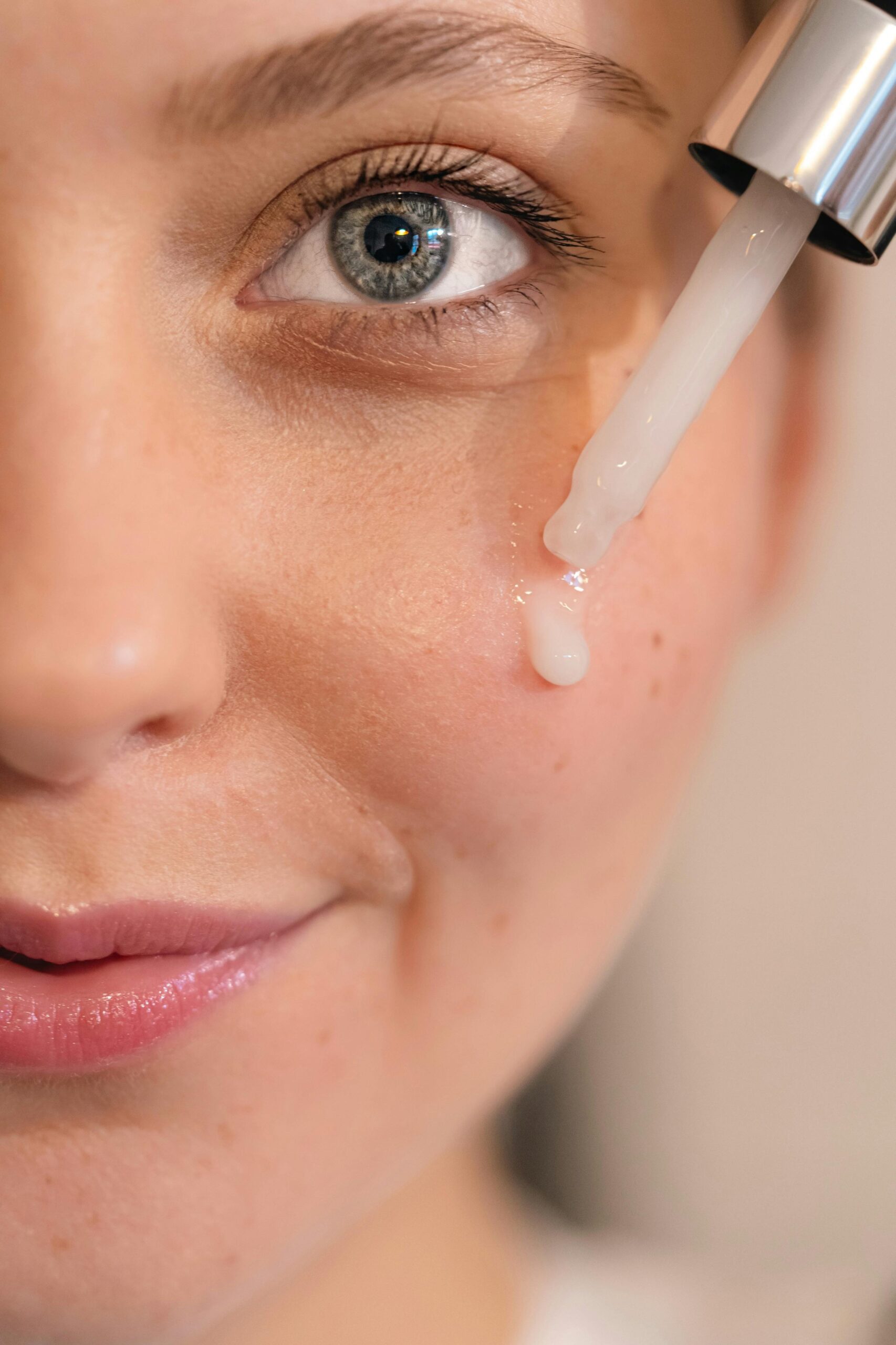
- Apply 2–3 drops of HA serum and press gently into the skin
- Immediately follow with moisturizer to seal in the hydration
- In the morning, finish with SPF 30+
The moisturizer step is essential — it acts as a seal that keeps the water HA attracted from evaporating. Without it, the effect is short-lived.
Where Hyaluronic Acid Fits in Your Routine
Morning: Cleanser → Vitamin C serum → Hyaluronic acid → Moisturizer → Sunscreen SPF 30+
Night: Cleanser → Hyaluronic acid → Retinol → Moisturizer
Hyaluronic acid is one of the few skincare ingredients with essentially no compatibility issues. It works alongside retinol, niacinamide, vitamin C, and SPF without interference, and can be used twice daily without any tolerance buildup needed.
If you’re building a routine from scratch, the early 30s skincare routine guide covers the full step-by-step framework including where HA fits within the broader layering order.
Best Hyaluronic Acid Serums for Women in Their 30s
Our top pick: Neutrogena Hydro Boost Hyaluronic Acid Serum
One of the most consistently recommended HA serums at a drugstore price. Lightweight, fragrance-free, and compatible with all skin types. Works well both morning and night under moisturizer.
Best for layering with retinol: The Ordinary Hyaluronic Acid 2% + B5
A no-frills, high-concentration HA serum combined with vitamin B5 for added barrier support. Particularly useful when starting retinol, as it helps buffer irritation and maintain hydration during the adjustment period.
Best multi-weight formula: La Roche-Posay Hyalu B5 Serum
Combines three forms of hyaluronic acid at different molecular weights with vitamin B5 and madecassoside. A good option if you’ve tried single-weight HA serums without significant results.
Best budget option: CeraVe Hyaluronic Acid Serum
Combines HA with ceramides and vitamin B5 to support the skin barrier alongside hydration. Fragrance-free, non-comedogenic, and developed with dermatologists.
Frequently Asked Questions
Can I use hyaluronic acid with retinol?
Yes — and you should. Applying HA before retinol helps maintain hydration and can reduce the dryness beginners often experience. For more on building a retinol routine safely, see the guide on retinol purging vs. irritation.
Can I use hyaluronic acid with niacinamide?
Yes, completely. Both are gentle, non-irritating ingredients with no compatibility issues. They can be layered in the same routine — HA first, niacinamide second, then moisturizer.
When should I start seeing results?
Immediate plumping and smoothness are noticeable on the first application. Deeper hydration and improvements in fine lines build over 4–8 weeks of consistent use.
How often should I use hyaluronic acid?
Twice daily — morning and night. It’s one of the few active ingredients gentle enough for daily double use.
Does hyaluronic acid replace moisturizer?
No. HA draws moisture to the skin but needs a moisturizer on top to prevent that moisture from evaporating. Think of HA as the filling and moisturizer as the seal.
Final Thoughts
Hyaluronic acid won’t rebuild collagen the way retinol does, and it won’t brighten skin tone the way vitamin C does. What it does is create the hydrated, healthy baseline that makes everything else work better.
In your 30s, when natural HA production starts declining and active ingredients become more important, a well-formulated HA serum is one of the simplest upgrades you can make to your routine.
For the full picture of how all these ingredients work together, see the night skincare routine for women in their early 30s.