
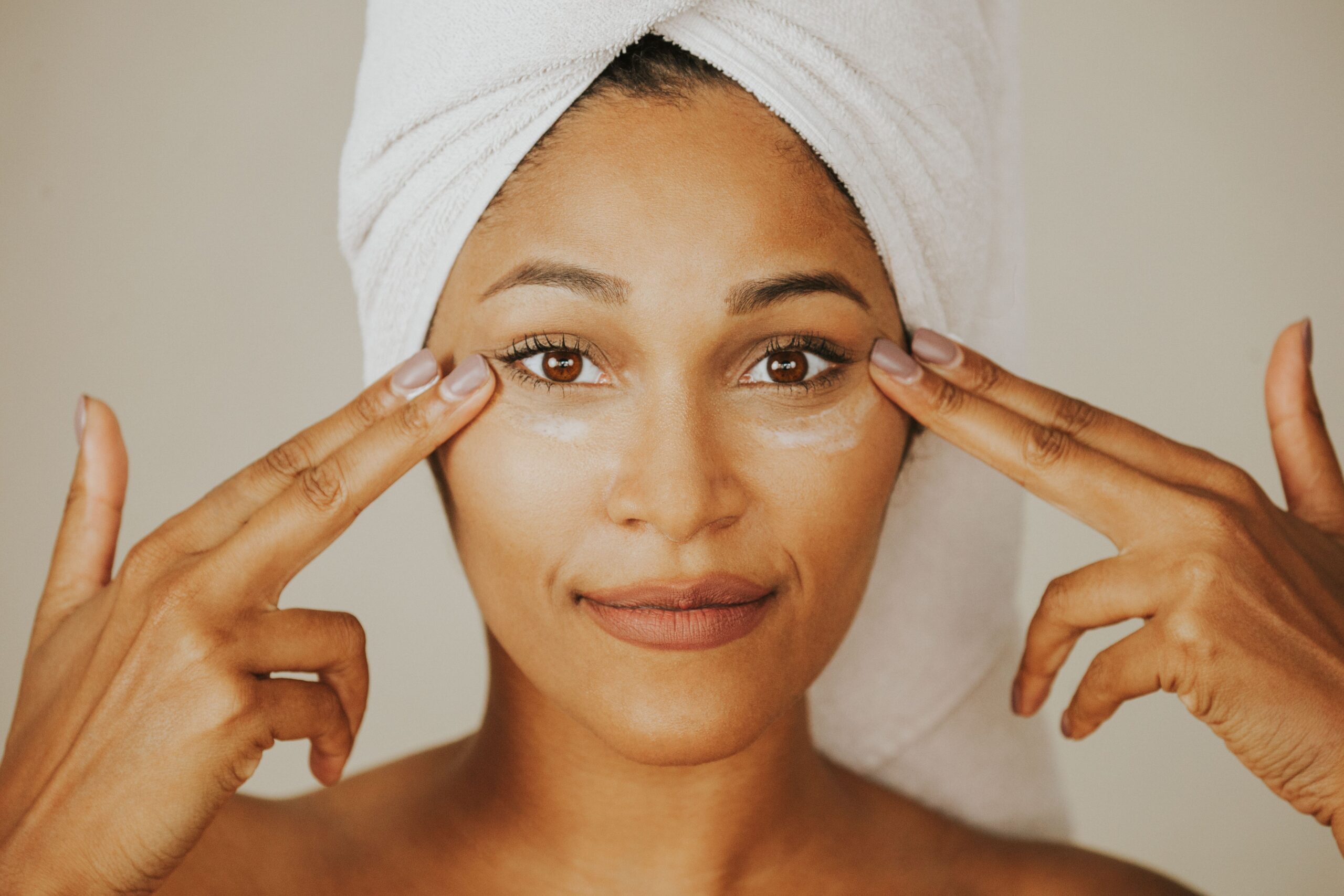
The eye area is among the first areas of the face to show age-related changes, and for many women that starts in their 30s — the fine lines that stay after you stop smiling, the shadows that a full night’s sleep doesn’t fully erase, the morning puffiness that takes longer to settle. Eye creams promise to fix all three, but most of them can’t. The American Academy of Dermatology is direct about this: no single product treats every sign of skin aging, and anti-aging products deliver modest results. The way to get real results is to pick the eye cream built for your main concern — and to know which ingredients have actual clinical evidence behind them.
Affiliate disclosure: This post contains affiliate links. If you purchase through them, I may earn a small commission at no extra cost to you. I only recommend products I’ve researched against the clinical evidence.
This guide covers what changes around the eyes in your 30s, which ingredients have been tested specifically on the eye area, and the five best eye creams for your 30s — matched to fine lines, dark circles, or puffiness, all available on Amazon.
The short answer: For fine lines and crow’s feet, choose a retinol or peptide eye cream (RoC Retinol Correxion or CeraVe Skin Renewing Eye Cream). For dark circles and dryness, CeraVe Eye Repair Cream is the best all-around pick under $15. For puffiness, look for caffeine (The INKEY List Caffeine Eye Cream). Apply a pea-sized amount, pat it on with your ring finger, and give it at least six weeks before judging results.
Why the Eye Area Needs Its Own Approach in Your 30s
The skin around your eyes is thinner and more delicate than the rest of your face, and it moves constantly — every blink, squint, and smile folds it. That’s why expression lines show up there first, often in your early 30s, before you notice changes anywhere else.
The three concerns most women in their 30s are dealing with have different causes, which is why one eye cream rarely fixes all of them:
- Fine lines and crow’s feet — repeated movement plus a gradual decline in collagen. This is where retinoids and peptides come in.
- Dark circles — can come from visible blood vessels and congestion under thin skin, from pigmentation, or both. Vitamin C, vitamin K, and caffeine have been studied here.
- Puffiness — fluid that collects under the eyes, especially in the morning. Caffeine is the most commonly used ingredient for this.
Knowing which one bothers you most is the single most useful thing you can do before buying. The AAD recommends exactly that: focus on your #1 aging-skin concern and choose a product that targets it, instead of layering several anti-aging products at once.
Which Eye Cream Ingredients Have Real Evidence
Most eye cream research is small and often funded by the brands themselves, so it’s worth being clear about what the studies show — and what they don’t.
Retinoids (for fine lines, and more). A 12-week study in the Journal of Drugs in Dermatology tested a hydrating retinoid eye cream (a retinoid combined with lactic acid) on adults aged 35–65 with fine to moderate periorbital wrinkles. In the 16 participants who applied it nightly, the appearance of lines and wrinkles improved by 33%, under-eye darkness by 41%, and puffiness by 55% from baseline, with no adverse events related to the products. It was a small, open-label study (26 participants completed it), so treat the numbers as encouraging rather than definitive.
Peptides (for fine lines). In a double-blind, placebo-controlled, split-face trial of 93 women aged 35–55, a moisturizer with the peptide palmitoyl pentapeptide reduced wrinkles and fine lines significantly more than the same moisturizer without it over 12 weeks — and it was well tolerated. Peptides are a good option if retinol is too irritating for your eye area.
Vitamin C, vitamin K, and retinol (for dark circles). An 8-week study of 57 adults found that a gel combining vitamin K, retinol, and vitamins C and E reduced dark circles in nearly half of participants — mostly the type caused by congestion and visible blood vessels. It did not clearly fade pigment-type dark circles, which is an important limitation.
Caffeine and vitamin C together (for dark circles and puffiness). A 12-week clinical study of 40 women aged 35–60 tested an eye cream with vitamin C, peptides, and caffeine and found significant improvement in dark circles, mainly by reducing blood-vessel congestion, melanin, and pigmentation from broken-down hemoglobin. 37 participants completed the study, which was open-label and funded by the brand that makes the cream.
The practical takeaway: retinoids and peptides have the strongest case for fine lines, while caffeine and vitamin C target the vascular side of dark circles and puffiness. No cream will erase dark circles that come from your bone structure or genetics — that’s where a dermatologist can help.
What to Look for on the Label
- An ingredient that matches your concern — retinol or peptides for lines, caffeine for puffiness, vitamin C or niacinamide for dullness and dark circles.
- Fragrance-free and ophthalmologist-tested — the eye area reacts more easily than the rest of your face, so skip fragrance entirely here.
- A barrier-supporting base — ceramides, hyaluronic acid, or glycerin keep this thin skin hydrated, which also makes fine lines look softer right away.
- Realistic claims — the AAD notes that “clinically proven” only means a product was given to consumers to try, not that it passed FDA clinical trials. Look for the ingredient, not the marketing.
The Best Eye Creams for Your 30s
| Product | Best For | Key Ingredients | Budget |
|---|---|---|---|
| CeraVe Eye Repair Cream | Best overall | Niacinamide + hyaluronic acid + 3 ceramides | $ |
| RoC Retinol Correxion Eye Cream | Best retinol eye cream | Retinol + mineral complex + panthenol | $ |
| CeraVe Skin Renewing Eye Cream | Best for fine lines (retinol-free) | Peptides + caffeine + niacinamide + HA | $ |
| The INKEY List Caffeine Eye Cream | Best for puffiness | Caffeine + Matrixyl 3000 peptides | $ |
| Clinique All About Eyes | Best splurge for dark circles | Caffeine + vitamin C derivative + vitamin E | $$$ |
1. CeraVe Eye Repair Cream — Best Overall
Why it works: This is the eye cream to start with if you’re not sure what you need. It combines niacinamide — listed second in the ingredients, right after water — with hyaluronic acid and CeraVe’s three essential ceramides in a fragrance-free formula that’s ophthalmologist-tested and accepted by the National Eczema Association. Niacinamide is one of the most-studied ingredients on this site (see what to expect in our niacinamide before and after guide), and here it helps soothe and even out the eye area while the ceramides and HA keep thin skin hydrated, so fine lines look softer almost immediately.
Who it’s for: Women in their 30s with dryness, mild dark circles, and early fine lines who want one gentle, affordable eye cream for morning and night. It also works well under makeup.
The downside: It’s a hydrating, barrier-supporting cream — not a targeted wrinkle treatment. If crow’s feet are your main concern, a retinol or peptide formula (picks #2 and #3) will do more.
How to use it: Pat a pea-sized amount around the eye area and brow bone with your ring finger, morning and night.
2. RoC Retinol Correxion Eye Cream — Best Retinol Eye Cream
Why it works: This retinol eye cream has more than 34,000 ratings on Amazon. It pairs retinol with a mineral complex and panthenol (vitamin B5) and targets the three main signs of eye aging — fine lines, dark circles, and puffiness. That’s consistent with the retinoid eye cream study above, where a different retinoid formula improved all three over 12 weeks.
Who it’s for: Women in their 30s who are seeing crow’s feet or lines that stay put, and who already tolerate retinol on the rest of their face. If you’re new to retinol, start with our guide to the best retinol for beginners over 30 first.
The downside: Retinol can sting or cause redness on thin eye skin, especially in the first weeks — RoC’s own directions mention mild tingling as your skin adjusts. If that happens, learn to tell the difference between adjustment and a real reaction in our retinol purging vs. irritation guide. It also requires daily sunscreen.
How to use it: Apply in small dots around the eye area at night. Board-certified dermatologist Dr. Tina Alster told the AAD she advises patients to use the least-intense retinoid formula and apply it every other night to start, building up slowly, and to use retinoids only at night with sun protection during the day.
3. CeraVe Skin Renewing Eye Cream — Best for Fine Lines (Retinol-Free)
Why it works: This is CeraVe’s anti-aging eye cream, and it’s built around a peptide complex (palmitoyl tripeptide-1 and palmitoyl tetrapeptide-7) plus caffeine, niacinamide, hyaluronic acid, and ceramides. Peptides are a well-studied retinol-free option for fine lines: a related peptide (palmitoyl pentapeptide) reduced wrinkles significantly versus placebo in the 93-woman split-face trial above, with good tolerance. The caffeine adds a depuffing effect, so this one covers more ground than most eye creams in its price range.
Who it’s for: Women in their 30s who want to treat fine lines and crow’s feet but find retinol too irritating around the eyes — or who already use retinol on the face and want a gentler formula for the eye area. It’s fragrance-free and suitable for contact lens wearers.
The downside: Peptides work gradually and more subtly than retinoids. Expect softer-looking lines over a couple of months, not a dramatic change.
How to use it: Apply morning and/or night after serums, before moisturizer or SPF.
4. The INKEY List Caffeine Eye Cream — Best for Puffiness
Why it works: Caffeine is the go-to ingredient for morning puffiness, and this lightweight cream pairs it with Matrixyl 3000 peptides for fine lines and albizia extract to help brighten tired-looking under-eyes. It’s light enough to use every morning under concealer, and the brand recommends keeping it in the fridge for an extra cooling, depuffing effect.
Who it’s for: Women in their 30s whose main concern is puffy, tired-looking eyes in the morning — especially if you want an inexpensive add-on rather than a full anti-aging treatment.
The downside: It’s a lightweight formula without ceramides, so it may not be hydrating enough on its own for dry skin. Its Amazon rating (4.0 stars) is also the lowest of these picks.
How to use it: Pat a pea-sized amount around both eyes in the morning, ideally straight from the fridge.
5. Clinique All About Eyes — Best Splurge for Dark Circles
Why it works: Rated 4.6 stars on Amazon, this lightweight cream-gel combines caffeine with magnesium ascorbyl phosphate (a stable vitamin C derivative), vitamin E, and green tea extract. Caffeine plus vitamin C is the same ingredient approach tested in the 12-week dark circles study above. It’s 100% fragrance-free, allergy-tested, and ophthalmologist-tested.
Who it’s for: Women in their 30s whose main concern is shadowy, tired-looking dark circles and who want a refined texture that layers well under makeup.
The downside: It’s the most expensive pick per ounce, and it won’t do much for fine lines — pair it with a retinol or peptide product at night if those matter to you too. Like any eye cream, it can’t change dark circles caused by your facial structure.
How to use it: Twice a day, pat a small amount around the entire eye area with your ring finger.
How We Selected These Eye Creams
Every product here was chosen based on three criteria: a key ingredient with clinical evidence for the eye area (retinoids, peptides, caffeine, vitamin C, or niacinamide), formulation quality (fragrance-free, tested for use around the eyes), and accessibility (available on Amazon with a large base of verified reviews). No sponsored placements.
How to Get Real Results From an Eye Cream
Patch test first. The AAD recommends testing any new anti-aging product on your inner forearm twice a day for four to five days before using it on your face. For the eye area, that step is worth the wait.
Stop if it stings. The same AAD guidance is clear: stinging, burning, or tingling means a product is irritating your skin — and irritated skin looks older. Retinol eye creams are a partial exception: RoC’s directions note that mild, temporary tingling or redness can happen while your skin adjusts. If it doesn’t settle, stop.
Give it time. According to the AAD, a moisturizer can plump fine lines in a few days, but most anti-aging products take at least six weeks to work, and sometimes up to three months. For a week-by-week look at what to expect from retinol specifically, see how long retinol takes to work.
Where it fits in your routine:
- Cleanser
- Serums (vitamin C in the morning; retinol or niacinamide at night)
- Eye cream — pat on with your ring finger, staying on the orbital bone
- Moisturizer — our best moisturizers for anti-aging in your 30s all work well over an eye cream
- SPF (morning only)
If your eye area feels dry, a hyaluronic acid serum underneath can help — see our best hyaluronic acid serums for your 30s.
FAQ
Do I really need an eye cream in my 30s? Not always. A gentle, fragrance-free face moisturizer can work around the eyes too. An eye cream is worth it when you have a specific concern — fine lines, dark circles, or puffiness — and want an ingredient that targets it in a formula tested for the eye area.
Can I use my retinol face serum around my eyes? It’s usually too strong for the thin skin there. A retinol eye cream is formulated at a gentler strength and tested around the eyes. If you do use a face retinoid nearby, keep it on the orbital bone, not on the eyelid.
What’s the best eye cream ingredient for dark circles? It depends on the cause. Caffeine and vitamin C have the most evidence for dark circles caused by visible blood vessels and congestion. Pigment-type dark circles are harder to treat with creams, and circles caused by shadows from your bone structure usually don’t respond to topical products — a board-certified dermatologist can tell you which type you have.
How long does it take for an eye cream to work? Hydration can make fine lines look softer within a few days. Changes in fine lines and dark circles usually take at least six weeks, and up to three months, of consistent use.
Should I apply eye cream before or after moisturizer? Before. Apply it after serums and before your moisturizer and SPF, so the more targeted product is closest to the skin.