
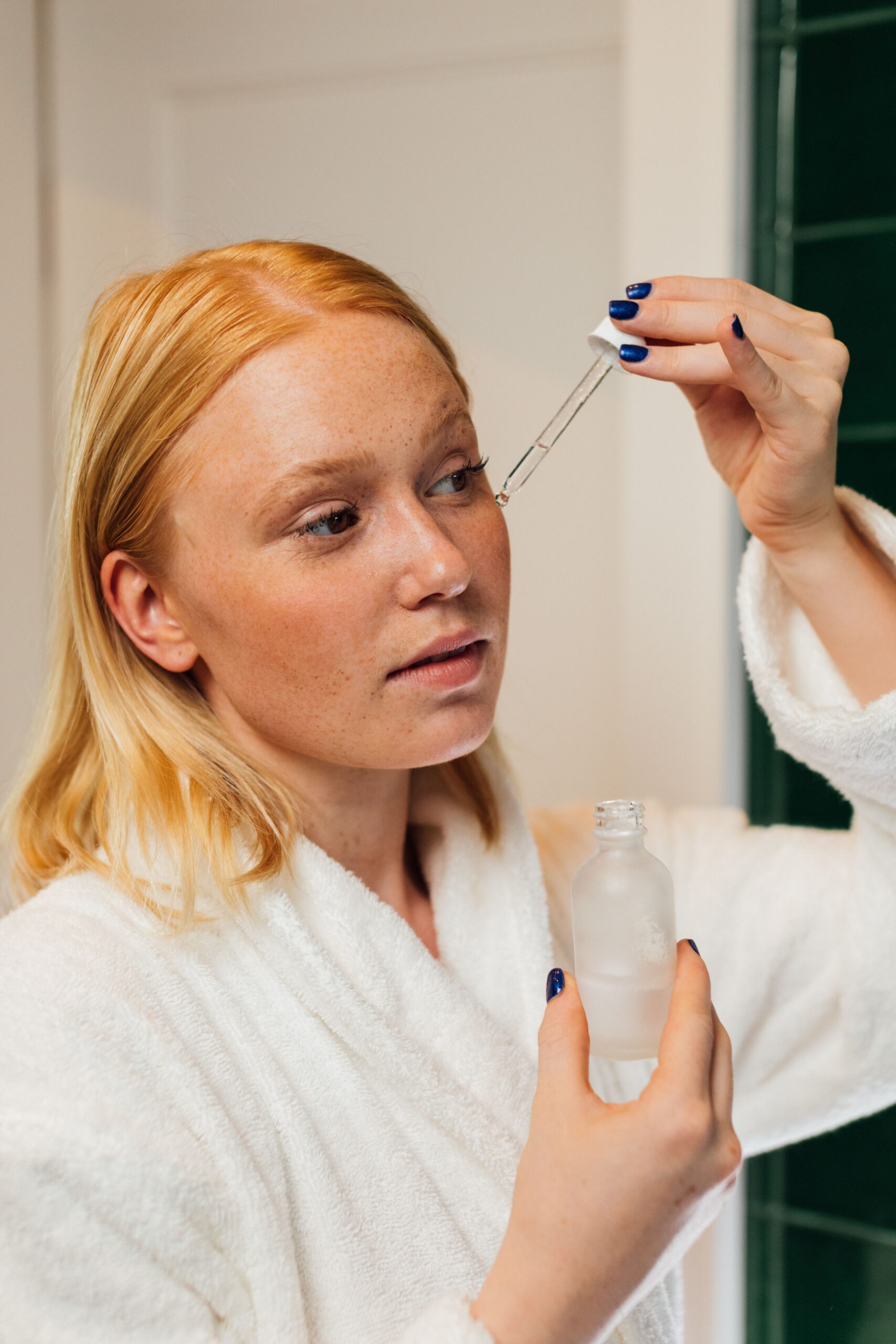
Hyaluronic acid shows up on almost every “hydrating” product label, which makes it easy to assume any bottle that lists it will do the same job. It won’t. The AAD names hyaluronic acid specifically for its intense moisturizing qualities when choosing a moisturizer — and board-certified dermatologist Dr. Marisa Garshick, MD, FAAD has noted it can improve skin texture and reduce the appearance of fine lines. But the concentration, the molecular weight, and what it’s formulated alongside all change how much of that benefit you actually get.
Affiliate disclosure: This post contains affiliate links. If you purchase through them, I may earn a small commission at no extra cost to you. I only recommend products I’ve researched against the clinical evidence.
This guide covers why hyaluronic acid matters more once you’re in your 30s, what to actually check on the ingredient list, and the five best serums for your 30s — picked for molecular weight, skin type, and price, all available on Amazon.
The short answer: Look for “sodium hyaluronate” (the stable, effective form used in serums) paired with a humectant like vitamin B5, and ideally more than one molecular weight so you get both surface plumping and deeper penetration. CeraVe Hyaluronic Acid Serum is the best all-around pick; The Ordinary Hyaluronic Acid 2% + B5 is the budget option. Apply to damp skin, right after cleansing and before anything heavier.
Why Hyaluronic Acid Matters More in Your 30s
Hyaluronic acid (HA) is a glycosaminoglycan your skin produces naturally. It’s a humectant — a molecule that binds and holds onto water — and it’s what keeps the dermis plumped and the skin surface smooth. HA content in skin declines with age, and that decline is already underway by your 30s, which is exactly why this ingredient gets more attention at this stage: you’re not adding something foreign to your skin, you’re replacing something your skin is already making less of.
Not all hyaluronic acid behaves the same way once it’s on your skin, though. A randomized, controlled trial published in the Journal of Drugs in Dermatology tested five molecular weights of hyaluronic acid (50, 130, 300, 800, and 2000 kDa) on 76 women aged 30–60 over 60 days, comparing each formula against a placebo on the opposite side of the face. All molecular weights improved hydration and elasticity. But only the lowest molecular weights — 50 and 130 kDa — produced a statistically significant reduction in wrinkle depth. The researchers attributed this to the better penetration ability of low molecular weight HA: smaller HA molecules can get past the outermost skin layer, while larger molecules mostly sit on the surface, forming a hydrating film.
That’s the practical takeaway for choosing a serum: a formula built around a single, large HA molecule will hydrate the surface but won’t do much below it. A formula with multiple molecular weights — or one paired with other humectants that work at different depths — covers both jobs at once. That’s the difference between the picks below and a generic “hyaluronic acid” bottle with no real information on the label.
What to Look for on the Label
- “Sodium hyaluronate,” not “hyaluronic acid” — sodium hyaluronate is the salt form of HA used in virtually all serums. It’s smaller, more stable, and more water-soluble than pure hyaluronic acid, which makes it the form that actually performs in a topical formula.
- A paired humectant — vitamin B5 (panthenol) is the most common pairing, and it reinforces HA’s water-holding effect while also supporting the skin barrier.
- Fragrance-free — the AAD’s general skincare guidance flags fragrance as a common sensitizer, and a hydrating serum you’re applying under other actives is not the place to introduce irritation risk.
- Applied to damp skin — hyaluronic acid draws moisture from its surroundings. On very dry skin in a low-humidity room, it can pull moisture from the deeper skin layers instead of the air if there’s no water on the surface to begin with. Applying it to slightly damp skin, right after cleansing or misting, avoids that problem entirely.
The Best Hyaluronic Acid Serums for Your 30s
| Product | Best For | Key Ingredients | Budget |
| CeraVe Hyaluronic Acid Serum | Best overall | HA + vitamin B5 + 3 ceramides | $ |
| The Ordinary Hyaluronic Acid 2% + B5 | Best budget | HA + vitamin B5 | $ |
| Vichy Mineral 89 Booster | Best for sensitive skin | HA + polyglutamic acid + mineralizing thermal water | $$ |
| La Roche-Posay Hyalu B5 | Best for fine lines | HA + vitamin B5 + madecassoside | $$ |
| Neutrogena Hydro Boost Serum | Best for oily/combo skin | HA (lightweight, oil-free) | $ |
1. CeraVe Hyaluronic Acid Serum — Best Overall
Why it works: This serum pairs hyaluronic acid with vitamin B5 and three ceramides in a fragrance-free, oil-free formula. The ceramides matter here: they’re the lipid molecules that make up roughly 50% of the skin’s barrier structure, so this serum is doing double duty — drawing in water via HA while reinforcing the barrier that keeps that water from evaporating back out. It’s developed with dermatologists and uses the same ceramide complex found across CeraVe’s moisturizer line, which means it layers predictably with the rest of a CeraVe-based routine.
Who it’s for: Women in their 30s with normal to dry skin, or anyone whose skin has gotten drier since starting retinol — the ceramides help offset the barrier disruption retinol can cause during the adjustment period.
The downside: It’s a single molecular weight of HA rather than a multi-weight blend, so most of its plumping effect is at the surface. The ceramides and B5 are what make it a stronger overall pick than a plain HA serum, not the HA itself.
How to use it: Apply to damp skin after cleansing, before a heavier moisturizer. Works morning and evening.
👉 CeraVe Hyaluronic Acid Serum 1oz — on Amazon
2. The Ordinary Hyaluronic Acid 2% + B5 — Best Budget
Why it works: At under $10, this is the least expensive way to get a legitimate 2% sodium hyaluronate concentration alongside vitamin B5. The Ordinary’s version has been reformulated to include multiple molecular weights, which — per the mechanism above — means it can address both surface hydration and slightly deeper penetration rather than just one layer.
Who it’s for: Anyone building a routine on a budget, or layering HA underneath multiple other actives (vitamin C, niacinamide, retinol) where you don’t want a heavy or expensive serum taking up a step.
The downside: No ceramides or other barrier-supporting ingredients, so on very dry or compromised skin it needs a proper moisturizer layered on top to lock the hydration in — it won’t do that job on its own.
How to use it: A few drops on damp skin, morning and evening, before other serums that are more concentrated or active.
👉 The Ordinary Hyaluronic Acid 2% + B5 — on Amazon
3. Vichy Mineral 89 Booster — Best for Sensitive Skin
Why it works: This serum combines hyaluronic acid with polyglutamic acid — another water-binding molecule — and Vichy’s mineralizing thermal water base, which is formulated to be gentle on reactive skin. The oil-free, fragrance-free formula makes it a low-risk hydrating step for skin that reacts to actives easily.
Who it’s for: Women in their 30s with sensitive, reactive, or easily irritated skin, especially if you’re also using retinol or an exfoliating acid and need a hydration step that won’t add to the irritation.
The downside: More expensive than CeraVe or The Ordinary for a similar core ingredient (HA), and the thermal-water positioning is more about tolerability than delivering a stronger anti-aging effect.
How to use it: Apply to damp skin as the first step after cleansing, before other serums or moisturizer.
👉 Vichy Mineral 89 Booster — on Amazon
4. La Roche-Posay Hyalu B5 — Best for Fine Lines
Why it works: Hyalu B5 pairs hyaluronic acid with a higher concentration of vitamin B5 and madecassoside, a centella asiatica derivative recognized for supporting skin repair and calming irritation. The combination is aimed specifically at visibly plumping fine lines rather than general hydration alone.
Who it’s for: Women in their 30s who are starting to notice fine lines (not deep wrinkles) and want a serum that addresses that specifically, on top of general hydration.
The downside: Priced closer to the premium end of drugstore skincare, and the added madecassoside makes it a more targeted (and more expensive) pick than a straightforward hydration serum.
How to use it: Apply to damp skin after cleansing, before moisturizer. Safe for morning and evening use.
👉 La Roche-Posay Hyalu B5 Serum — on Amazon
5. Neutrogena Hydro Boost Hyaluronic Acid Serum — Best for Oily and Combination Skin
Why it works: A lightweight, oil-free hyaluronic acid serum with none of the heavier ingredients (ceramides, thermal water, madecassoside) that can feel occlusive on oilier skin types. It delivers HA’s hydration without adding weight or contributing to congestion.
Who it’s for: Women in their 30s with oily, combination, or acne-prone skin who still need the hydration step — skipping it because your skin is oily often backfires, since dehydrated skin can produce more oil to compensate.
The downside: No barrier-supporting or targeted ingredients beyond HA itself, so it’s a hydration step only — pair it with a proper moisturizer rather than expecting it to replace one.
How to use it: Apply a few drops to damp skin, let it absorb fully before layering SPF or makeup on top.
👉 Neutrogena Hydro Boost Serum — on Amazon
How We Selected These Serums
Every product here was chosen based on three criteria: ingredient transparency (a real sodium hyaluronate concentration, not just “hyaluronic acid” listed low on the ingredient panel), formulation quality (fragrance-free, paired with a complementary humectant or barrier ingredient), and accessibility (available on Amazon with verified reviews). No sponsored placements.
How to Layer Hyaluronic Acid With Your Other Actives
Hyaluronic acid is one of the few ingredients that’s compatible with almost everything else in a routine — it doesn’t compete with retinol, vitamin C, or niacinamide the way some actives do. The order that works for most routines:
- Cleanser
- Vitamin C serum (morning only, if using)
- Niacinamide or retinol serum (if using — see how retinol layers with vitamin C)
- Hyaluronic acid serum, applied to still-damp skin
- Moisturizer — see our best moisturizers for anti-aging in your 30s if you need one that pairs well with HA
- SPF (morning only)
For a deeper look at how and when to apply hyaluronic acid specifically — including whether to use it on wet or dry skin — see our full guide to using hyaluronic acid in your 30s. If you’re also starting retinol, check how long it typically takes to see results — a good HA serum is one of the easiest ways to make that adjustment period more comfortable.
FAQ
Can I use hyaluronic acid every day? Yes — it’s one of the few actives dermatologists recommend for daily, twice-a-day use. It doesn’t build tolerance the way retinol does and has no meaningful irritation risk on its own.
Should I apply hyaluronic acid on wet or dry skin? Damp skin, specifically. HA draws moisture from whatever is nearby — if your skin is completely dry and the air is dry too, it can pull moisture from deeper skin layers instead. A light mist of water or applying right after cleansing solves this.
Does hyaluronic acid replace moisturizer? No. HA draws water in; moisturizer (especially one with ceramides or occlusive ingredients) seals it in. Skipping moisturizer after HA in a low-humidity environment can leave skin drier than before you applied it.
Can I use hyaluronic acid with retinol? Yes, and it’s one of the most useful combinations for people starting retinol. Applying HA before or after retinol helps offset the dryness and flaking that often show up in the first few weeks of use.
How long does it take to see results from a hyaluronic acid serum? The plumping effect is close to immediate — often visible within an hour as the skin absorbs the water HA draws in. The longer-term hydration and texture benefits build over 4–6 weeks of consistent, twice-daily use.